

So, you're meeting your partner's family at their Chinese New Year reunion dinner. No pressure, right? Just the most important meal of the year, surrounded by relatives you've never met, while trying not to mess up centuries of tradition. Cool, cool, cool.

Here's the thing: showing up empty-handed isn't just awkward, it's a cultural misstep. But bringing the wrong thing? That's arguably worse. Mandarin oranges sound festive, except they're for house visits, not reunion dinners. Wine seems safe until you discover the family doesn't drink. And that expensive abalone you splurged on? It might sit untouched because no one knows how to prepare it.
We've been there. That stomach-churning anxiety of wanting to make a good impression while navigating traditions you're still learning. The good news? You don't need to be a CNY expert to get this right. You just need to understand the basics, ask the right questions, and choose something thoughtful that actually fits the occasion.
Let's break down exactly what to bring to the Chinese New Year reunion dinner, how to choose it, and why certain gifts work better than others.
Table of Contents
Understanding CNY Reunion Dinner vs. House Visiting (They're Not the Same)
Before you panic-buy a basket of mandarin oranges, let's clarify something crucial: reunion dinner and CNY house visiting are two completely different occasions with different gifting customs.
Reunion dinner happens on Chinese New Year's Eve. It's an intimate family affair, usually just immediate family and their partners. You're sitting down to a multi-course feast, often at someone's home. The vibe is warm, nostalgic, slightly chaotic with everyone trying to coordinate dishes and seating arrangements.
House visiting happens during the 15 days following CNY. You're dropping by someone's home for tea and snacks, staying maybe an hour or two. This is when mandarin oranges make their grand entrance because they're easy to carry, beautifully symbolic (the Hokkien word sounds like "gold"), and don't require refrigeration or immediate consumption.
For reunion dinner, you want something that adds to the meal or can be enjoyed afterward. A shareable food gift that shows thoughtfulness without trying to compete with the main feast. Think of it as contributing to the celebration rather than being the celebration itself.
The confusion between these two occasions is probably why your Google search brought up conflicting advice. Some articles say "always bring oranges!" while others insist on premium delicacies. They're both right, just for different contexts. For reunion dinner specifically, you're looking at cookies, desserts, premium beverages, or luxury food items that can be shared or saved.
What Actually Counts as a Respectful CNY Reunion Dinner Gift
A Chinese New Year reunion dinner guest gift serves one purpose: showing respect and appreciation to the host family while fitting into the celebratory atmosphere. It's not about showing off your budget or trying to impress with the most exotic item you can find.
Traditional reunion dinner gifts fall into a few reliable categories. Festive cookies and biscuits top the list because they're universally appreciated, don't require preparation, and can be enjoyed during or after the meal. Pineapple tarts, love letters, kueh bangkit, these are comfort foods that signal you understand the culture.
Premium food items like canned abalone, bird's nest, or dried seafood also work, especially if your partner's family appreciates traditional ingredients. These items carry symbolic weight (abalone represents abundance, bird's nest symbolizes good health) and can be stored for later use. Just know that they're a bigger statement, usually reserved for more formal relationships or when you're trying to make a particularly strong impression.
Dessert boxes or cakes hit that sweet spot between thoughtful and practical. They're elegant enough to feel special but casual enough not to seem like you're trying too hard. Plus, they solve the eternal question of "what's for dessert?" that inevitably comes up after a massive reunion dinner.
Wine or premium beverages work if you know the family drinks, but this requires insider knowledge from your partner. Some families treasure a good bottle of red wine or premium tea, while others won't touch alcohol and might feel uncomfortable receiving it.
What makes a gift "respectful" isn't necessarily its price tag. It's the thought behind it and whether it fits the occasion. A $30 tin of handmade pineapple tarts shows more cultural awareness than a $200 bottle of champagne if the family doesn't drink. Similarly, a beautifully packaged dessert box that everyone can enjoy immediately beats exotic delicacies that might sit in the pantry for months.
The key is choosing something that adds value to their celebration without creating extra work or awkwardness.
Step 1: Confirm It's Actually Reunion Dinner (Not CNY Visiting)
This sounds obvious, but you'd be surprised how many people show up with the wrong gift because they misunderstood the invitation.
Ask your partner straight up: "Is this the reunion dinner on CNY eve, or are we visiting during the CNY period?" The answer completely changes your gift strategy. Reunion dinner typically happens on the evening before CNY, involving a sit-down feast with close family. CNY visiting is more casual, happens over the following days, and follows different gift protocols.
If it's a reunion dinner, you're essentially being welcomed into an intimate family tradition. This is huge. You're not just a casual guest; you're being included in one of the most meaningful gatherings of the year. The gift you bring should reflect that significance.
Some families host multiple gatherings. Your partner's parents might have their own reunion dinner with their children and partners on CNY eve, then host extended family for a different meal on CNY day one or two. Clarifying which event you're attending helps you gauge the formality and choose accordingly.
Also worth asking: Is this at a restaurant or someone's home? Restaurant reunion dinners are increasingly common in Singapore, especially for larger families or those who don't want the cooking stress. If it's at a restaurant, your gift might be received at the table rather than at the door, which changes the logistics slightly but not the type of gift.
Step 2: Discreetly Ask Your Partner What Their Family Enjoys
This is where your partner becomes your secret weapon. They know whether their parents are health-conscious (skip the ultra-sweet treats), adventurous with food (modern flavors could work), or traditional (stick with classics).
Ask questions like: "Does your family enjoy desserts after dinner?" or "Are there any foods they avoid for health or religious reasons?" This isn't just about preventing mishaps, it's about showing you care enough to choose something they'll genuinely appreciate.
Find out if the family has dietary restrictions. Some households avoid certain ingredients due to allergies, religious practices, or health conditions. Discovering that someone's diabetic after you've handed over a box of sweet cookies isn't ideal. Your partner should know these details and can guide you accordingly.
Also inquire about family size. Are you bringing something for six people or sixteen? This affects whether you need a small elegant box or something more substantial. A tiny dessert box might feel stingy for a large gathering, while a massive tin of cookies could be overkill for an intimate dinner of five.
Your partner might also know what previous partners or family friends have brought in the past. This gives you a benchmark. If everyone typically brings pineapple tarts or cookies, you know you're on safe ground with similar choices. If past gifts were more premium (wine, abalone), you might want to match that level.
Don't interrogate your partner like you're planning a military operation, but a few casual questions over coffee will give you everything you need to make a smart choice.
Step 3: Choose Your Main Shareable Item
This is your primary gift, the thing that gets presented when you walk through the door. You want something that feels substantial enough to be meaningful but not so elaborate that it overshadows the meal itself.
Dessert boxes are probably the safest, most versatile option for reunion dinner. They're instantly shareable, require zero preparation, and can be enjoyed right after the meal or saved for later. The visual appeal matters too; a beautifully arranged dessert box looks thoughtful and celebratory.
Pâtisserie CLÉ's Eight Treasures Dessert Box ($88) is designed exactly for this scenario. Eight individual petit desserts, each inspired by CNY symbolism, but executed with French pastry techniques. You get traditional flavors like orh nee and salted egg, matcha sesame, chrysanthemum, and mandarin chocolate. It's familiar enough that older relatives won't find it weird, but refined enough that younger family members will be impressed.

Eight Treasures Dessert Box
8 handcrafted petit desserts • fixed set
What makes this work is the variety. Large families with different taste preferences can each find something they like. The chrysanthemum mousse appeals to those who appreciate subtle, tea-like flavors. The cookies and cream piece attracts anyone who loves classic chocolate desserts. The mango pomelo tart gives you tropical brightness, while the Ispahan offers that rose-lychee-raspberry elegance.
It's also a fixed set, which actually simplifies your decision. You're not agonizing over which flavors to pick; you're presenting a complete, curated experience that already balances traditional and modern.
If you're leaning toward something more traditional, festive cookies never fail. They're culturally significant, easy to share, and don't compete with the main meal since they're typically enjoyed afterward with tea.
Pineapple tarts are the undisputed champion of CNY cookies in Singapore. They symbolize prosperity (the Hokkien word for pineapple, "ong lai," sounds like "prosperity comes"), and almost everyone grew up eating them during CNY.
Mama G's Golden Pineapple Tarts from Pâtisserie CLÉ take this classic seriously: hand-peeled pineapples, slow-cooked in small batches, encased in buttery pastry that melts on contact. At $35 for 30 pieces, it's accessible but still feels special because of the obvious craftsmanship.

Mama G's Golden Pineapple Tarts
Hand-rolled • slow-cooked filling • 30 cookies
If you want something a bit different while staying in cookie territory, the Abundant Cookie Gift Box ($50) gives you three distinct flavors: Salted Egg Yolk Cereal (that beloved Singaporean flavor), Dark Chocolate Fleur de Sel (refined, not too sweet), and Sesame Almond Yin Yang (symbolically perfect for CNY). About 20 pieces per flavor means there's enough to go around, and the flavor variety ensures everyone finds something they enjoy.

Abundant Cookie Gift Box
3 flavours • ~20 pieces each • 160g per flavour
For families that appreciate traditional premium ingredients, canned abalone, dried scallops, or bird's nest are still highly respected gifts. These items carry serious symbolic weight and demonstrate that you understand CNY's association with abundance and prosperity. They're also practical because they have long shelf lives and can be used in future meals.
The downside? They're expensive (good abalone starts around $80 for a decent tin), and there's a chance they'll sit in the pantry if the family doesn't regularly cook with these ingredients. If your partner confirms their family loves preparing these items, go for it. Otherwise, stick with something more immediately enjoyable.
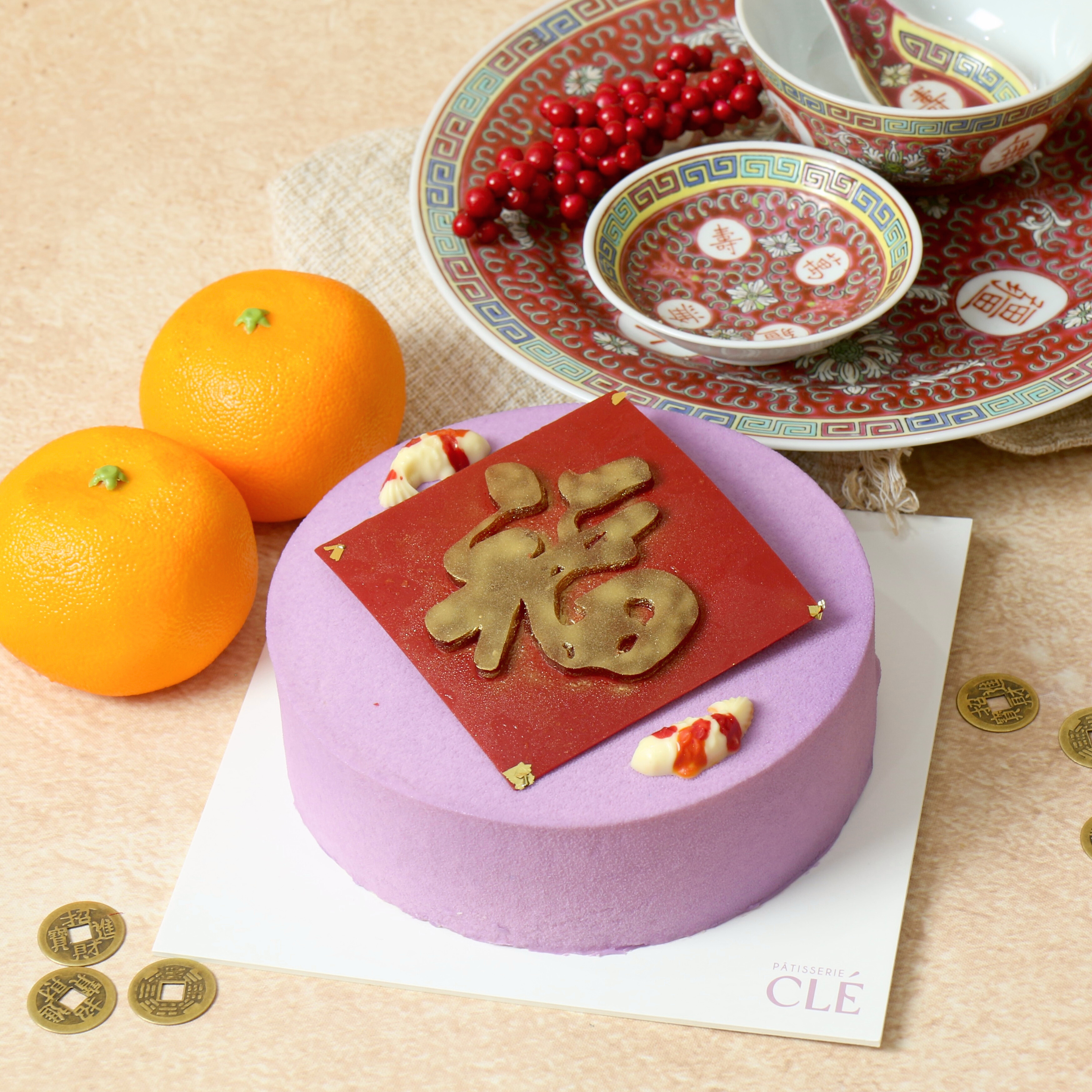
Whole cakes can work if the gathering is large enough and you know dessert isn't already planned. Pâtisserie CLÉ's Orh Nee & Salted Egg Cake brings familiar CNY flavors (yam, coconut, salted egg) into cake form. The 8-inch version ($105) serves 8-10 people, making it appropriate for bigger family gatherings. Just confirm with your partner that a cake makes sense for their dinner setup.
Step 4: Consider Adding a Premium Touch (Optional)
If you want to go beyond the standard gift, especially if this is your first time meeting the family or if cultural norms in their household lean formal, adding a premium element shows extra thoughtfulness.
Wine or premium spirits work beautifully if you know the family appreciates them. A good bottle of red wine or aged whiskey adds sophistication and can be enjoyed during the meal or saved for special occasions. Just make absolutely sure they drink alcohol. Arriving with wine for a family that doesn't drink is awkward for everyone.
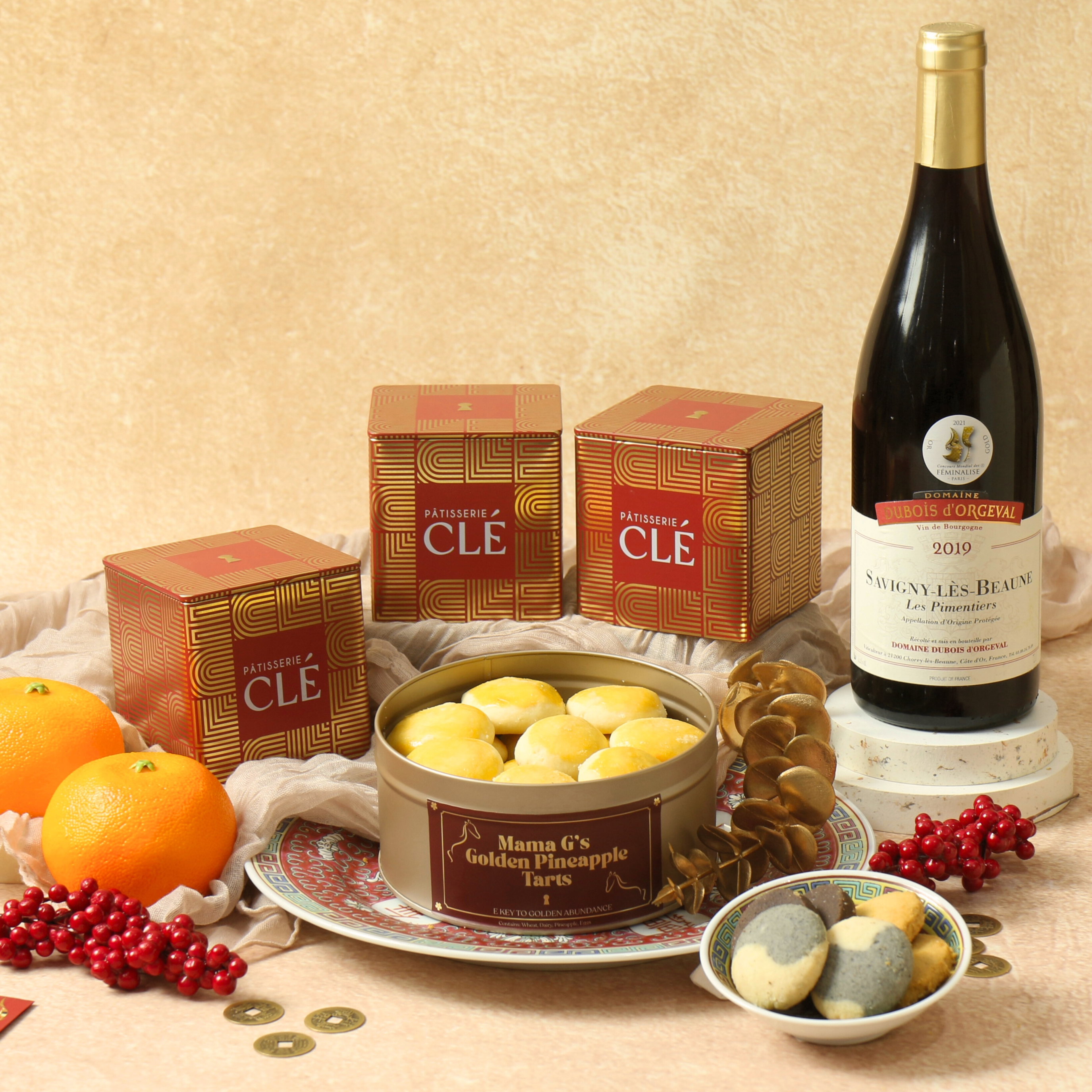
Pâtisserie CLÉ's Prosperity Wine Hamper ($258) handles this question for you by bundling everything together: premium French red wine, four types of handcrafted cookies (including their signature pineapple tarts), and mandarin oranges for symbolism. It's presented in a rich burgundy leather-style carrier that looks genuinely impressive. This is the "pull out all the stops" option for when you're meeting the parents for the first time or when you know expectations run high.
Premium tea is another safe bet that works across different family types. High-quality pu-erh, oolong, or jasmine tea shows cultural awareness and gives the family something they can enjoy long after CNY ends. Look for reputable tea shops in Chinatown or established brands, and make sure it's beautifully packaged.
Luxury fruit baskets have their place, particularly imported fruits like Japanese melons, premium Korean pears, or gourmet fruit arrangements. They're visually stunning and symbolize abundance. The challenge is ensuring freshness and dealing with the sheer size; some fruit baskets are enormous and might overwhelm a small gathering.
Health supplements like bird's nest, cordyceps, or premium ginseng appeal to health-conscious families and carry connotations of wishing good health and longevity. These are particularly appropriate if you're meeting older relatives or if health is a known concern in the family.
That said, don't feel pressured to add a premium element if a well-chosen main gift already feels right. Sometimes the simple elegance of beautiful cookies or a thoughtfully selected dessert box says everything you need to say.
Step 5: Timing and Presentation Matter
You've chosen the perfect gift. Now let's talk about how and when to present it, because execution matters almost as much as selection.
Arrive slightly early. Not so early that you're in the way during final dinner preparations, but early enough that you're not rushing in as everyone's sitting down. This gives you a moment to present your gift properly rather than awkwardly handing it over while people are already eating.
Present it to the hosts directly, ideally both parents if possible. Make eye contact, smile, and offer it with both hands (a small gesture that shows respect in Chinese culture). You don't need to make a big speech; something simple like "This is for you and your family, happy Chinese New Year" works perfectly.
Don't expect it to be opened immediately. Unlike Western gift-giving culture where unwrapping happens right away, many Chinese families will set your gift aside to open later. This isn't rude; it's normal. Don't take it personally if your beautifully chosen dessert box gets placed on the side table without immediate examination.
If your gift is meant to be enjoyed during or after the meal (like a dessert box or cake), you can gently mention it: "We brought some desserts that might be nice after dinner if you'd like." This gives the hosts the option to incorporate it into the meal without pressuring them.
Presentation quality counts. Make sure whatever you bring looks festive and well-packaged. Scratched tins, damaged boxes, or anything that looks like it's been sitting in your car for three days doesn't make a great impression. Most reputable bakeries and gift shops will package CNY items beautifully, so take advantage of that.
If you're bringing something from Pâtisserie CLÉ, it's already packaged elegantly, designed specifically for gifting. You don't need to rewrap it unless you want to add a personal touch like a CNY greeting card.
What Not to Bring (Common Mistakes to Avoid)
Let's talk about what doesn't work, because knowing what to avoid is just as important as knowing what to bring.
Mandarin oranges for reunion dinner. We've mentioned this already, but it bears repeating because it's such a common mistake. Oranges are for house visiting during the CNY period, not for reunion dinner. Showing up with oranges on CNY eve suggests you don't understand the cultural context, which isn't the impression you want to make.
Anything requiring immediate refrigeration or complex preparation. Your hosts are already managing a massive dinner with multiple dishes. Don't add to their stress by bringing fresh seafood that needs to be cooked immediately or fancy ingredients that require special handling. Unless specifically requested, stick with items that can be set aside and enjoyed later.
Clocks, scissors, or handkerchiefs. These are culturally taboo CNY gifts because of unfortunate phonetic associations with death, cutting relationships, or parting ways. Even if you think it's superstitious, many families take these associations seriously, so just avoid them entirely.
White or black packaging. These colors are associated with funerals and mourning in Chinese culture. CNY gifts should feature red, gold, or other festive colors. Reputable shops selling CNY items will already package appropriately, but double-check if you're repackaging something yourself.
Extremely perishable items. Fresh flowers sound lovely but they'll compete for vase space and might wilt quickly in Singapore's heat. Fresh cakes or desserts that must be consumed within hours create unnecessary pressure. Choose items with reasonable shelf life.
Anything that could embarrass your partner. Skip novelty gifts, jokes, or anything that doesn't match the formality of the occasion. This isn't the time for quirky or ironic presents. Keep it respectful and straightforward.
The Pros and Cons of Different Gift Categories
Let's weigh your main options so you can see how each choice stacks up.
Dessert Boxes and Cakes
Pros:
- Immediately shareable after dinner, solving the "what's for dessert?" question
- Visually impressive when packaged well
- Appeals to most age groups and dietary preferences
- Easier to buy last-minute from established bakeries
- Modern options (like French-Asian fusion desserts) feel current and thoughtful
- No preparation required; just unbox and serve
Cons:
- May overlap if other guests bring similar items
- Some traditional families might prefer more symbolic or premium gifts
- Whole cakes require planning (is there enough fridge space? are there plates and forks?)
- Dietary restrictions (diabetes, allergies) could limit who can enjoy them
Traditional Cookies (Pineapple Tarts, Love Letters, etc.)
Pros:
- Deep cultural significance and nostalgia factor
- Universally appreciated across generations
- Long shelf life means no pressure to consume immediately
- Clear symbolic meaning (prosperity, good fortune)
- Safe choice that rarely offends anyone
- Easy to find from multiple vendors if you're shopping last-minute
Cons:
- Can feel predictable or generic if everyone brings cookies
- Quality varies dramatically between brands; cheap versions can disappoint
- Some families might already have multiple tins from other relatives
- Less visually impressive than premium hampers or wine
Premium Delicacies (Abalone, Bird's Nest, Dried Seafood)
Pros:
- Strong symbolic associations with wealth, health, and abundance
- Demonstrates cultural knowledge and respect for tradition
- High perceived value shows you're taking the relationship seriously
- Long shelf life; can be stored and used when convenient
- Particularly appreciated by older, more traditional family members
Cons:
- Expensive, often starting around $80 and going much higher
- Might sit unused if the family doesn't regularly cook these ingredients
- Requires knowledge of quality and proper selection
- Can feel overly formal for casual relationships or younger families
- Creates higher expectations for future interactions
Wine and Premium Beverages
Pros:
- Adds sophistication to the meal if the family drinks
- Premium wines or spirits can be saved for special occasions
- Pairs naturally with reunion dinner's celebratory atmosphere
- Tea works as an alcohol-free alternative that still feels premium
Cons:
- Complete non-starter if the family doesn't drink alcohol
- Wine selection requires some knowledge to avoid cheap-looking choices
- Cultural mismatch if the family strongly prefers tea or other beverages
- May go unused and take up storage space
Quick-Reference Gift Guide by Budget
Let's break this down by what you're comfortable spending:
Under $50:
Mama G's Pineapple Tarts ($35) - classic, safe, culturally spot-on
Individual cookie tins ($32 each) - Salted Egg Yolk Cereal, Sesame Almond Yin Yang, or Dark Chocolate Fleur de Sel
Premium tea from established brands
Quality fruit basket from reputable shops
$50-$100:
Abundant Cookie Gift Box ($50) - three flavors, beautifully packaged, substantial enough for larger gatherings
Eight Treasures Dessert Box ($88) - the sweet spot for most reunion dinner scenarios
Mid-range wine plus a small box of cookies
Premium abalone or bird's nest (entry-level)
$100-$150:
Orh Nee & Salted Egg Cake 8-inch ($105) - for larger families who appreciate whole cakes
High-quality abalone or dried seafood
Premium wine plus dessert box combination
Luxury tea set with premium varieties
$150+:
Prosperity Wine Hamper ($258) - the comprehensive solution when you want to make a statement
Multiple gift items combined (cake plus cookies plus wine)
Top-tier abalone, sea cucumber, or bird's nest
Custom hampers from luxury gift shops
Remember, the "right" budget depends on your relationship stage and the family's expectations. First time meeting the parents might warrant higher investment than year five of dating. Your partner's guidance is invaluable here.
People Also Ask (And What You Need to Know)
Do you need to bring mandarin oranges for CNY reunion dinner?
No. Mandarin oranges are for house visiting during the 15 days of CNY, not for reunion dinner on CNY eve. For reunion dinner, bring shareable food gifts like dessert boxes, festive cookies, or premium delicacies. Save the oranges for when you're visiting relatives' homes during the CNY period.
Is it rude to show up to CNY dinner without a gift?
Yes, it's considered disrespectful and shows lack of cultural awareness. CNY reunion dinner is one of the most important family occasions of the year. Arriving empty-handed suggests you don't value the invitation or understand the significance of being included in this intimate family tradition. Even a modest gift shows thoughtfulness and respect.
What's a safe CNY gift for the first time meeting your partner's parents?
Stick with festive cookies (especially pineapple tarts), a quality dessert box, or the Abundant Cookie Gift Box. These options show cultural awareness without being too flashy or presumptuous. They're appropriate for all age groups, don't require insider knowledge of family preferences, and demonstrate that you've put thought into respecting tradition. Avoid anything too casual (like regular supermarket snacks) or too intimate (expensive jewelry or highly personal items).
Can you bring store-bought items or does it need to be homemade?
Store-bought from reputable bakeries or specialty shops is completely acceptable and often preferred. Homemade gifts are lovely if you're a confident baker, but reunion dinner is high-stakes enough without the pressure of your baking skills being judged. Quality matters more than whether you made it yourself. Established bakeries like Pâtisserie CLÉ specialize in CNY items and package them beautifully for gifting.
What if the family already has too many desserts or cookies?
Good news: CNY treats have decent shelf life, and most families are happy to store extras for the 15 days of visiting when they'll be hosting or visiting others. Unlike Western holiday cookies that might feel excessive, CNY cookies and desserts are expected to last throughout the festive period. That said, if you know for certain they're drowning in sweets, premium tea or a carefully selected wine might be a better choice.
Making It Personal Without Overthinking
Here's something worth remembering: your partner's family isn't expecting you to be a CNY expert or to bring the most expensive gift in Singapore. They're evaluating whether you're respectful, thoughtful, and genuinely interested in being part of their celebration.
That means a well-chosen $50 gift presented with warmth and sincerity will always beat a $200 premium hamper handed over with visible anxiety. Smile, make eye contact, thank them for including you in their reunion dinner, and genuinely mean it.
Ask questions during the evening (respectfully, without interrupting the meal flow) about family traditions, the significance of certain dishes, or CNY memories from your partner's childhood. This shows real interest and creates connection beyond just the gift exchange.
If you make a small etiquette mistake, don't panic. Most families will appreciate your effort and understand you're still learning. Your partner can help smooth over any awkward moments, and honestly, everyone's usually too focused on enjoying the meal and each other's company to scrutinize your every move.
The gift is your introduction, but your presence, attitude, and genuine interest in connecting with your partner's family matter far more in the long run.
Where to Buy Last-Minute (Because Let's Be Real)
If you're reading this two days before reunion dinner, don't worry. Singapore has plenty of options for quality last-minute CNY gifts.
Pâtisserie CLÉ offers their Lunar New Year collection through online ordering. The collection is available from 1st February to 3rd March, and there's currently an Early Bird promotion (10% off with minimum $80 spend, valid till 23rd January, excluding delivery). This means you can order online and arrange pickup or delivery without fighting Chinatown crowds.
Chinatown remains the traditional choice for CNY shopping, with established bakeries and specialty shops offering pineapple tarts, love letters, and traditional cookies. Go mid-week and earlier in the day to avoid peak crowds. Look for shops with long queues; in Singapore, queues usually indicate quality.
Premium bakeries in shopping districts like ION Orchard, Takashimaya, and Marina Bay Sands stock CNY gift sets. They're pricier than Chinatown but offer convenience and consistent quality. Good for last-minute shopping when you can't make it to traditional shops.
Specialty wine shops for premium bottles, or tea specialists like Tea Chapter or TWG for high-quality tea gifts. These work well if you're adding a premium touch to complement cookies or desserts.
Online delivery services like RedMart, Amazon Singapore, or specialty CNY hamper sites offer convenience but order early to ensure delivery before reunion dinner. Check reviews carefully since quality can vary.
The Gift Is Just the Beginning
Your reunion dinner gift is important, but it's really just opening the door. What happens during the meal itself, how you interact with family members, whether you show genuine interest in their lives and traditions, these things build the relationship far beyond any box of cookies.
Offer to help with serving or clearing dishes (though you'll likely be told to sit and enjoy). Compliment specific dishes genuinely, not generically. Ask about the significance of certain foods or family traditions. Thank the hosts warmly before you leave.
And maybe most importantly, follow up with your partner afterward. Ask how they thought it went, whether there's anything you should know for next time, what traditions you might not have understood fully. This shows you're invested in getting it right and deepening your connection to their family.
CNY reunion dinner as the partner's plus-one can feel nerve-wracking, but it's also an honor. You're being welcomed into traditions that go back generations, into the heart of family connection and celebration. A thoughtful gift is your way of saying "thank you for including me, I respect your traditions, and I'm grateful to be here."
Choose something that feels right, present it with warmth and sincerity, and remember that your genuine presence matters more than perfection. Happy Chinese New Year, and good luck. You've got this.