

So you're hosting a Christmas party, and someone asked the million-dollar question: what champagne goes with chocolate cake? Here's the thing. If you've ever taken a sip of dry champagne right after a forkful of rich chocolate ganache, you know that moment of… confusion. Your palate does a little dance, and not the good kind.
Let me save you from that awkward taste experience. The truth about champagne and chocolate cake isn't what most party planners expect, and that's exactly what makes it interesting.
Table of Contents
Why Your Champagne Might Be Fighting Your Cake

Picture this: You've got a beautiful chocolate cake on the dessert table. Everyone's raising their champagne flutes for a toast, then diving straight into cake. And suddenly, that expensive bottle you bought tastes oddly sharp, almost bitter.
What happened? It's simple wine science, really. Most champagne is dry, meaning it has very little residual sugar. When you pair something bone-dry with something intensely sweet, the wine's acidity gets amplified. It's like squeezing lemon juice on candy. Not quite the festive harmony you were going for.
A dessert wine is a wine sweeter than the dessert it accompanies to avoid the wine tasting overly acidic. That's the golden rule sommeliers use, and it applies just as much to your Christmas party as it does to a Michelin-star restaurant.
The Smart Solution: Two Bottles, Zero Compromises

Here's what actually works at a Christmas party. Buy one dry sparkling wine (Brut) for savory starters. Buy one sweet or fortified wine (tawny or vintage Port, PX sherry) for chocolate cake. Then sequence your pours: sparkling first, dessert wine at cake service.
See? Not complicated. You're not breaking any rules by serving two different wines. You're actually being a more thoughtful host.
Think of it like a well-planned dinner party. You wouldn't serve the same wine with oysters and crème brûlée, right? Same logic here. Your guests are going to be snacking on cheese, maybe some charcuterie, definitely some savory nibbles before that cake comes out. That's when champagne shines. It cuts through richness, cleanses the palate, feels celebratory. Everything you want from a party wine.
But when it's time for dessert? That's when you bring out the big guns. A fortified wine like Port or a sweet sherry will match the intensity of your chocolate cake without that jarring acid clash.
Breaking Down Your Options: Champagne vs Port for Chocolate
Let's get practical. What are the actual pros and cons here?
Champagne with chocolate cake:
-
Pros: Festive, great for toasts, keeps the palate fresh, pairs beautifully with savory party food
-
Cons: Can taste too acidic or bitter when paired directly with sweet chocolate, might leave guests reaching for water
Port with chocolate cake:
-
Pros: Intensely complementary to chocolate, creates that luxurious dessert moment, rich and warming for winter
-
Cons: Heavier on the palate, less versatile if you're also serving savory courses, not ideal for toasting
The smart money? Use both, strategically.
What to Actually Buy for Your Party
If you're shopping for a Christmas gathering, here's your practical breakdown by price point and purpose.
For the sparkling wine (served first, with appetizers and savory courses):
Look for Brut champagne or high-quality sparkling wine. The term "Brut" means dry, which is exactly what you want here. A proper Brut will have crisp acidity, fine bubbles, and enough structure to stand up to rich cheese, smoked salmon, or charcuterie boards.
In Singapore, Champagne Collery Brut Grand Cru is a solid choice if you want something with pedigree. It's made from grapes grown in Aÿ, one of the top villages in Champagne, and brings notes of fresh pastry, stone fruits, and citrus. The kind of bottle that works for toasting and for sipping throughout appetizers.
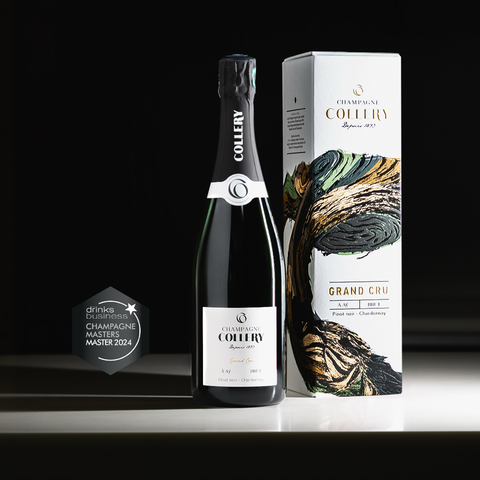
Champagne Collery Brut Grand Cru NV
pastry, stone fruit, spice
If you're looking for something with even more elegance, the Collery Blanc de Blancs Grand Cru is pure Chardonnay, aged five years on lees. That extended aging gives it a creamy texture and complex notes of white flowers, buttery pastry, and citrus. It's the bottle you open when you want to impress, or when you know your guests will actually appreciate the difference.

Champagne Collery Blanc de Blancs Grand Cru
floral, citrus, mineral finish
For the dessert wine (served with chocolate cake):
Here's where it gets interesting. You've got a few stellar options, and the best one depends on your cake's specific profile.
If your chocolate cake is dark, intense, maybe with some bitter cocoa notes? Vintage Port is your friend. It's got the sweetness to balance the chocolate, plus dark fruit flavors (think black cherry, plum) that echo what's already in the cake. Ruby Port works too, and it's usually more affordable.
If your cake is more on the milk chocolate side, with caramel or hazelnut (think a chocolate praline log cake), consider a tawny Port. It's aged in barrels, which gives it nutty, caramel notes that play beautifully with those flavors.
PX sherry (Pedro Ximénez) is the dark horse option. Extremely sweet, thick, with notes of raisins, figs, and molasses. If your chocolate cake has any dried fruit or spice element, this is spectacular.
And here's a curveball: ratafia. It's a fortified wine from the Champagne region, made by blending grape must with brandy. The Collery Ratafia Pinot Noir brings black cherry, subtle pepper, and a rounded palate with stewed pears and spice. It's less common than Port, which makes it a conversation starter, and it pairs gorgeously with chocolate that has fruit or spice notes.

People Also Ask (And Here's What You Should Know)
Which Ports pair best with chocolate cake?
Vintage Port and ruby Port are your best bets for most chocolate cakes. Vintage Port has more complexity and structure, perfect for dark chocolate. Ruby Port is fruitier, more approachable, great for milk chocolate or cakes with berries. If your cake has caramel, nuts, or toffee notes, go for a tawny Port instead. The barrel aging creates caramel and nutty flavors that mirror what's in the dessert.
Can I serve champagne and Port together at a Christmas party?
Absolutely. In fact, this is the smart move. Champagne handles the savory courses and maintains that festive atmosphere. Port (or another dessert wine) handles the chocolate cake without any awkward flavor clashes. Just sequence them properly: sparkling wine first, dessert wine when the cake comes out. Your guests get the best of both worlds.
How to sequence champagne and dessert wine at a party?
Start with champagne or Brut sparkling wine during appetizers and savory courses. When you bring out dessert, offer a sweeter wine like Port, sweet sherry, or a fortified wine. You can announce the switch casually, "I've got Port for anyone who'd like it with the cake," or just quietly pour for interested guests. After dessert, some people will want to return to champagne, others will stick with the dessert wine. Both are fine.
Special Considerations for Different Chocolate Cakes
Not all chocolate cakes are created equal, and that matters for your pairing.
Dark chocolate cake with intense cocoa: Go for vintage Port or a full-bodied sweet red. The tannins in dark chocolate need something with structure. A Banyuls (fortified red wine from France) also works beautifully here.
Milk chocolate or praline-based cakes: Tawny Port is ideal. Those caramel and hazelnut notes from barrel aging create perfect harmony. If you're serving something like a hazelnut praline log cake with vanilla mousse and chocolate ganache, tawny Port hits every note.
Chocolate with fruit elements: If your cake has raspberry, cherry, or orange, consider ruby Port (for berry flavors) or ratafia (for stone fruits and spice). PX sherry works surprisingly well with chocolate-orange combinations.
Chocolate with caramel or toffee: This is tawny Port territory all the way. The oxidative aging creates similar caramel notes. Alternatively, a sweet Madeira can be stunning.
What Dessert Actually Pairs Well with Champagne
Since we've established that chocolate cake isn't champagne's best friend, what does work?
Light fruit tarts, lemon desserts, anything with berries, panna cotta, meringues, macarons. Basically, desserts that aren't intensely sweet or heavy on chocolate do beautifully with Brut champagne.
A rosé champagne can even handle some chocolate desserts if they're light and fruit-forward. Think chocolate-dipped strawberries or a chocolate mousse with raspberry. The fruit notes in the rosé bridge the gap.
If you're putting together a dessert spread that includes both chocolate and lighter options, champagne can handle the variety. It's really just that intense chocolate + dry wine combination that gets tricky.
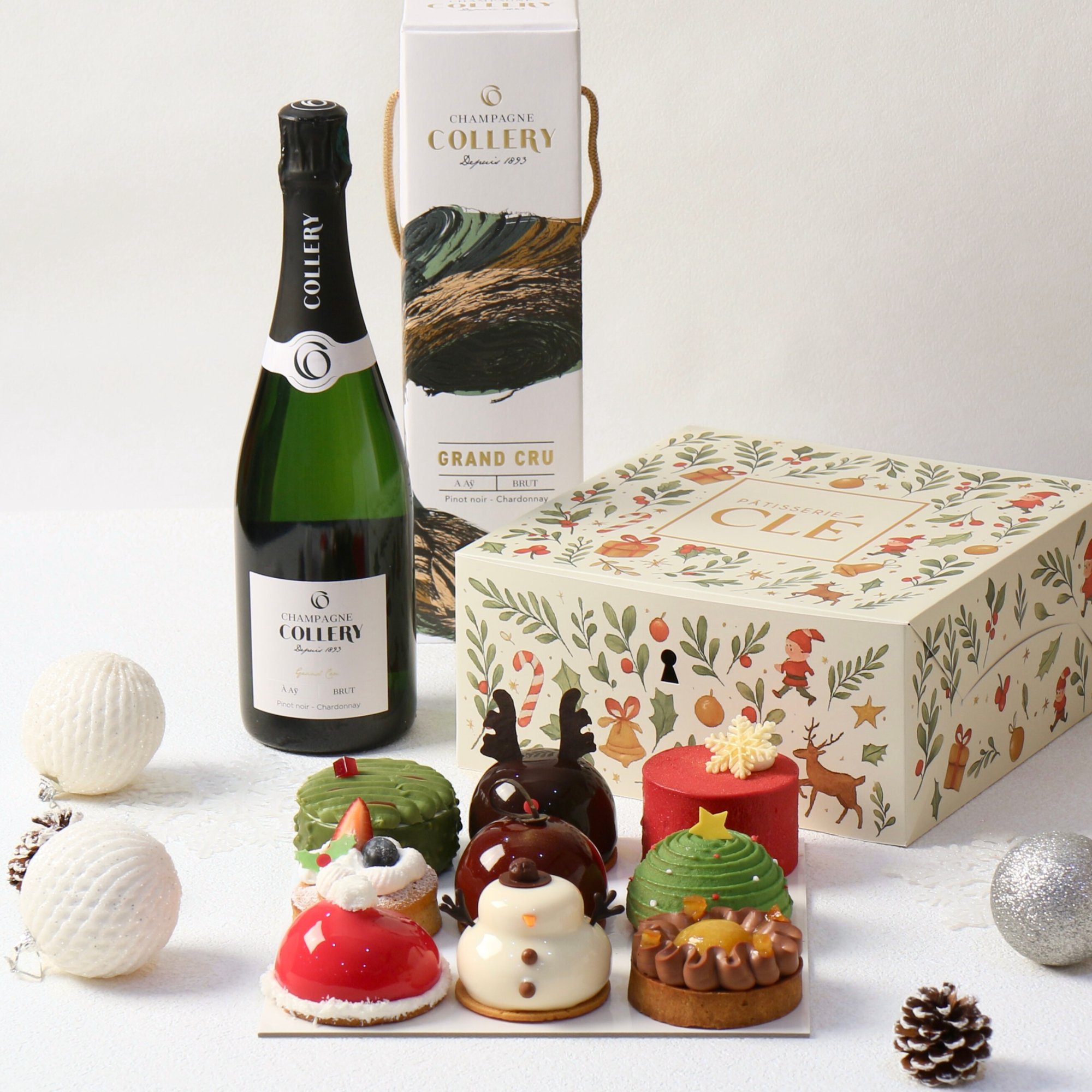
Christmas Gift Box & Champagne Pairing
9 pastries + Collery Brut Grand Cru
Final Thoughts: Making It Memorable
Here's what I've learned from years of hosting and attending Christmas parties: The perfect pairing isn't just about the wine and the food. It's about the whole experience.
A Christmas party with champagne feels celebratory. A thoughtful host who switches to dessert wine for the cake? That's someone who's paid attention to detail. And when your guests take that first sip of Port or ratafia with their chocolate cake and get that moment of perfect harmony? That's when you know you've done something right.
The beauty of this approach is that it's not actually complicated. Two bottles, served at the right moments, and suddenly your party has this flow that just works. Champagne for the festive beginning, dessert wine for the sweet finish, and everyone leaves happy.
So when someone asks you, "What champagne should I buy for my Christmas party with chocolate cake?" you can smile and say, "Let me tell you about a better question."
Because the best champagne for a chocolate cake is actually the one you don't serve with the chocolate cake.