
There's something about the pop of a champagne cork that makes any occasion feel special. But here's the thing: while most of us know champagne goes with celebrations, figuring out what to actually serve with it can feel like navigating a wine list written entirely in French. Do you go with chocolate? Fruit? Something creamy? And wait, isn't champagne supposed to be for toasts, not dessert?

Let's clear that up right now. Champagne and dessert are actually a match made in heaven, but only if you know how to pair them properly. Get it right, and you'll have your guests asking for seconds (and thirds). Get it wrong, and you'll be stuck with half-empty bottles and confused faces.
So whether you're hosting a Christmas party, looking for the perfect gift pairing, or just want to elevate your next dinner at home, this guide will walk you through everything you need to know about pairing champagne with desserts. No sommelier degree required.
Table of Contents
Why Champagne Works Magic with Desserts
Before we dive into specific pairings, let's talk about why champagne even works with sweet things in the first place.
Think of champagne's bubbles as tiny palate cleansers. They cut through richness, refresh your taste buds between bites, and prevent that heavy, "I can't eat another bite" feeling you get from dense desserts. The acidity in champagne also balances sweetness beautifully. It's like how a squeeze of lemon brightens up a rich dish, except more elegant and festive.
But here's where it gets interesting: not all champagnes are created equal. The style you choose matters just as much as the dessert you're serving. A delicate vanilla tart needs a different champagne than a chocolate ganache cake. Match them wrong, and one will overpower the other. Match them right, and suddenly you're that friend who "really knows their stuff."
The Four Champagne Styles You Need to Know
Let's keep this simple. For dessert pairing, you really only need to understand four types:
Blanc de Blancs is made entirely from Chardonnay grapes. It's light, crisp, and elegant with notes of citrus, white flowers, and sometimes a hint of almond. Think of it as the refined, graceful option that won't overwhelm delicate flavors.
Brut or Grand Cru is your versatile workhorse. Made from a blend of grapes (usually Pinot Noir and Chardonnay), it has more body and complexity. You'll taste things like fresh pastries, stone fruits, and warm spices. This is what most people think of when they picture champagne.
Rosé Brut brings berry flavors into the mix, usually raspberry, cherry, or strawberry, with that gorgeous pink color. It has a bit more weight and fruitiness, making it perfect for richer desserts.
Ratafia is the wild card. Technically a fortified wine from Champagne, it's sweeter and richer than regular champagne, with caramel and dried fruit notes. If you've never heard of it, you're not alone, but it's about to become your secret weapon for holiday entertaining.
The Pairing Matrix: What Goes with What
Light and Delicate Desserts + Blanc de Blancs
Macarons, fruit tarts, vanilla-based pastries, cream puffs, anything with citrus.
Why it works: Blanc de Blancs won't bulldoze delicate flavors. Its citrus notes actually enhance vanilla and cream-based desserts, while its minerality keeps things from getting too sweet.
If you're serving a dessert box with assorted French pastries (think elegant little tarts and airy mousses), Champagne Collery Blanc de Blancs Grand Cru is your move. It's made from 100% Chardonnay grown in Grand Cru vineyards, with those telltale white flower and buttery pastry aromas that make it feel like it was literally designed for a French patisserie spread.
The serving tip? Chill it properly (around 45-48°F), and watch how the bubbles lift each bite instead of competing with it.

Champagne Collery Blanc de Blancs Grand Cru
• floral, citrus, mineral finish
Chocolate and Berry Desserts + Rosé Brut
Dark chocolate mousse, chocolate-covered strawberries, raspberry tarts, anything with red fruits or cacao.
Why it works: This is where rosé champagne really shines. The berry notes in the wine mirror berry flavors in desserts, while the wine's body stands up to chocolate's intensity without getting lost.
Here's a pairing that actually makes sense: chocolate pastries with Champagne Collery Rosé Brut Grand Cru. With notes of rose petals, raspberry, and morello cherry, it's basically made for chocolate-berry combinations. The citrus backbone (blood orange, pink grapefruit) keeps everything balanced instead of cloyingly sweet.
Pro tip: Don't pair rosé champagne with milk chocolate. It's too light. Go for dark chocolate (at least 60% cacao) to match the wine's sophistication.
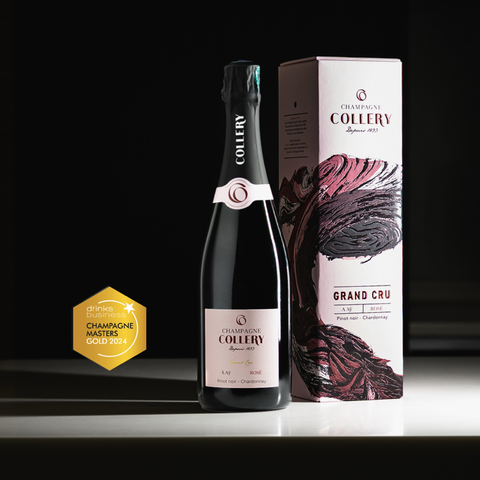
Champagne Collery Rosé Brut Grand Cru
rose, raspberry, citrus
Rich, Nutty Desserts + Ratafia
Log cakes, praline anything, caramel desserts, nut-based tarts, tiramisu.
Why it works: Regular champagne can actually get overwhelmed by really rich desserts. That's where Ratafia comes in. It's fortified with brandy, so it has more body and sweetness to match dense, nutty, caramel-forward flavors.
Take something like a hazelnut praline log cake. You need a drink that won't wimp out against all those layers of chocolate ganache, praline crunch, and vanilla mousse. Collery Ratafia Pinot Noir, with its stewed pear, licorice, and spice notes, actually complements that richness instead of just trying to cut through it.
The best part? Most of your guests have probably never tried Ratafia before, which makes you look like you really did your homework.

Complex, Multi-Layered Desserts + Grand Cru Brut
Fancy layered cakes, entremet-style desserts, anything with multiple textures and flavors.
Why it works: Grand Cru champagnes come from the absolute best vineyard sites in Champagne. They have the complexity and depth to match desserts that have a lot going on, think multiple mousses, fruit inserts, crunchy layers, glazes.
If you're serving something like CLÉ's Christmas Gift Box with nine different pastries in flavors ranging from matcha strawberry to chocolate hazelnut, you need a champagne that's versatile enough to work with all of them. Champagne Collery Brut Grand Cru fits that bill perfectly. With 80% Pinot Noir and 20% Chardonnay, it has both body and elegance, stone fruit and citrus, pastry notes and mineral finish.
It's the champagne equivalent of a little black dress: works for basically everything.
Want both together? The Christmas Gift Box & Champagne Pairing takes the guesswork out entirely. You get the full selection of nine artisan pastries plus a bottle of Grand Cru, already matched and ready to impress. It's the kind of pairing that makes you look like you spent hours researching when really, someone already did the work for you.
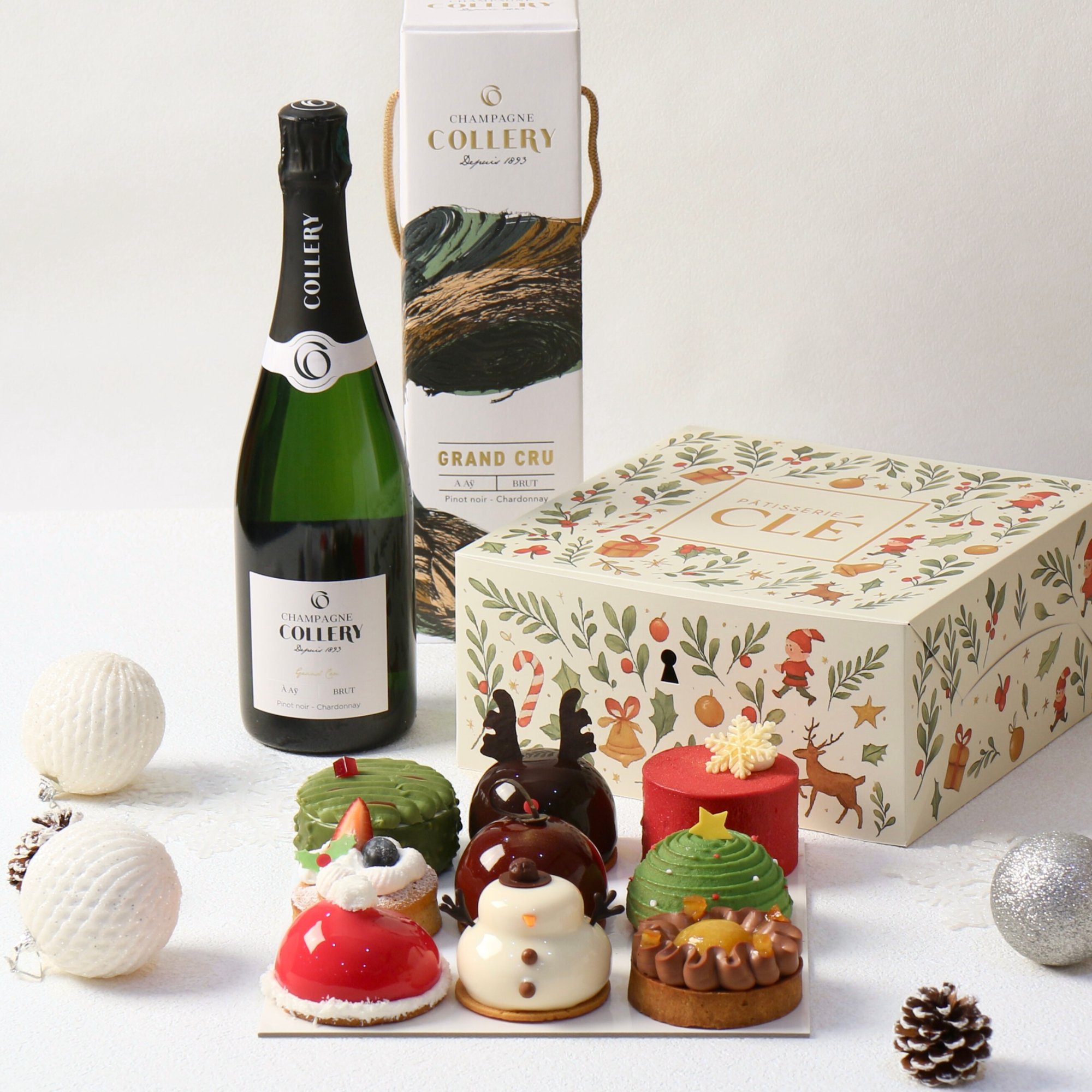
Christmas Gift Box & Champagne Pairing
9 pastries + Collery Brut Grand Cru
The Questions Everyone Actually Wants to Ask
Can you really pair champagne with chocolate?
Yes, but not just any chocolate with any champagne. Dark chocolate (60-75% cacao) pairs beautifully with Rosé Brut because both have depth and complexity. Milk chocolate works better with lighter styles or even Blanc de Blancs if the chocolate isn't too sweet. White chocolate? Skip the champagne and go for a dessert wine instead.
Should champagne be served before or with the dessert?
With. Serving it before means your guests' palates won't be ready for the pairing. Serve it alongside dessert so the bubbles and acidity can do their job of balancing each bite.
How much do I actually need?
Plan for about 75-100ml per person for a dessert pairing. That's roughly one bottle for every 6-8 guests. If your party's running longer and people are having multiple servings, bump it up to one bottle per 5-6 people.
Real Talk: The Shortcuts That Actually Work
Look, not everyone has time to become a champagne expert or bake elaborate desserts from scratch. Sometimes you just need a solution that works without requiring a culinary degree.
That's where ready-made pairings save you. Something like the Hazelnut Praline Log Cake with Champagne Bundle takes all the guesswork out. The dessert is already professionally crafted, the champagne pairing has been tested, and you just show up looking like you planned everything perfectly.
Same goes for the Cheese & Charcuterie Gift Box with Champagne Bundle if you want to offer something savory alongside sweets. Champagne works with cheese too, and having both options means everyone at your party finds something they love.
Want to see all your options? Check out CLÉ's Christmas Wonderland collection for the full range of champagne pairings, gift boxes, and holiday desserts. Whether you're hosting, gifting, or treating yourself, there's a pairing that'll make your holiday season feel a bit more special without the stress of figuring it all out yourself.
Your Game Plan for Holiday Hosting
Here's how to actually pull this off at your next gathering:
Start by choosing 2-3 champagne styles based on your dessert menu. If you're serving a variety of sweets (smart move), grab a Blanc de Blancs for light items, a Rosé or Grand Cru for richer options, and maybe a Ratafia if you're feeling adventurous.
Set up a self-serve station with bottles in ice buckets, proper champagne flutes (not those wide coupe glasses, which let bubbles escape too fast), and small cards noting which champagne pairs with which desserts. Your guests will appreciate the guidance, and you won't spend the whole party playing sommelier.
Serve champagne at the right temperature. Too cold (below 43°F) and you'll mute all those complex flavors you paid for. Too warm (above 55°F) and it'll taste alcoholic and flat. Aim for 45-48°F, use an ice bucket, and you're golden.
For desserts, think about texture variety too. Creamy, crunchy, fruity, chocolate. This gives people options and shows off how versatile champagne pairing can be.
Why This Actually Matters
Anyone can serve champagne and dessert at a party. But when you nail the pairing, something shifts. Suddenly people aren't just eating and drinking, they're actually tasting. They notice how the citrus in the champagne brings out the lemon in the tart, or how the bubbles make the chocolate feel lighter somehow.
It's one of those small details that separates a good party from one people actually remember. And unlike elaborate decorations or complicated menus, getting champagne and dessert right doesn't require that much extra effort. Just a bit of knowledge and some smart choices.
This Christmas season, whether you're hosting a crowd, looking for the perfect gift, or just treating yourself to something special, don't underestimate what a well-chosen champagne and dessert pairing can do. It's the difference between "that was nice" and "when are you hosting again?"
Now if you'll excuse me, I have a Blanc de Blancs and some pastries calling my name.